Colonel Melrose
The Murder of Roger AckroydColonel Melrose, the Chief Constable, represents the official police authority in the investigation of Roger Ackroyd’s murder. Courteous toward Hercule Poirot but protective of the police inquiry, he becomes a point of contrast with Inspector Raglan’s early certainty: Melrose accepts outside assistance, while the investigation’s apparent evidence against Ralph Paton ultimately proves compatible with a much less obvious explanation.
Identity and Introduction
Melrose is identified as the Chief Constable and is known personally to Dr. James Sheppard, who introduces him to Poirot at the police station. He arrives with Inspector Davis and Inspector Raglan, whose sour confidence and resentment of amateur interference sharpen the distinction between Melrose’s measured authority and Raglan’s more combative manner.
The setting around the case is a village where gossip is a chief recreation and Fernly Park is one of only two houses of importance. In that tightly watched community, the official investigation must contend not only with physical clues but also with ready-made stories about the people connected to the household.
Authority and Cooperation with Poirot
When Poirot is introduced, Melrose makes clear that Ackroyd’s family may do what it sees fit, but that the official investigation must not be obstructed. He acknowledges Poirot’s reputation courteously, even as Raglan complains that the police cannot publicize themselves and that amateurs have cost them time. Melrose’s position is therefore neither an unqualified welcome nor a rejection: Poirot may contribute, provided he does not hamper the police.
Melrose helps defuse the confrontation by hearing Poirot’s assurance that he has retired, dislikes publicity, and does not wish his name mentioned if he helps solve the mystery. The exchange gives Poirot room to investigate without turning cooperation into a public contest over authority.
Evidence and the Suspect Narrative
The police case initially fixes on Ralph Paton. Inspector Raglan reports that Paton left around nine, was seen near Fernly Park about half past nine, has not been seen since, and is believed to be in serious financial difficulty. Raglan also has a pair of Paton’s rubber-studded shoes and intends to compare them with the footprints at the study window. Melrose accompanies the party to Fernly Park, where the physical trace and the suspect’s disappearance appear to reinforce one another.
Raglan then gives the clues a complete, incriminating sequence: Paton is seen passing the lodge at 9:25; a visitor asks Ackroyd for money and is refused; Paton supposedly returns through the drawing-room window, takes the dagger from the silver display table, enters the study, and escapes again. In this account, the missing man’s financial trouble, the footprints, and the murder weapon seem to converge. But it is a reconstruction, not a witnessed account of the killing, and Poirot’s questioning unsettles its neatness.
The False Call and the Limits of Inference
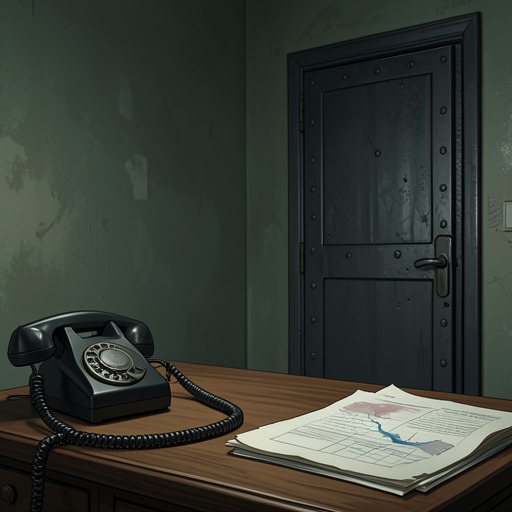
Melrose brings forward a crucial result from the telephone inquiry: the call that drew Dr. Sheppard to Fernly Park at 10:15 did not originate in the house. It was placed from a public call office at King’s Abbot station, shortly before the 10:23 night mail left for Liverpool. The finding supplies a concrete location and timetable for the call, but by itself it does not establish who placed it or why. Its importance lies in separating the summons from the household and making its timing part of the murder’s wider pattern.
Poirot’s later review of the case shows why apparently solid clues require testing. The footprints on the study window ledge could have been made by Paton, by someone wearing similar studs, or by a person seeking to implicate him; meanwhile, the household’s shoes were crepe-soled, and Charles Kent’s boots were described as nearly worn through. Poirot also stresses that the murderer must have had an opportunity to take the dagger before Flora Ackroyd examined the silver table, knew about Ackroyd’s dictaphone, possessed mechanical ingenuity, and could hide the machine in a receptacle such as a black bag. Melrose’s investigation supplies the official setting for these clues, but the final synthesis belongs to Poirot.
Narrative Role
Melrose is not portrayed as the detective who solves the case; his function is to embody the police inquiry as it gathers evidence, assesses a suspect, and makes room for an outside investigator. The contrast between Raglan’s confident reconstruction and Poirot’s methodical testing makes the distinction between a plausible story and a demonstrated one central to the investigation. Melrose’s restrained cooperation allows that distinction to emerge without reducing the police to mere obstruction.